
Rule of thumb: if your garage door is slow to open or feels stuck at the bottom on a cool morning, the cause is almost always old lubricant or a swollen weather seal — not actual ice. Franklin County winters rarely hold a hard freeze long enough to bond a door to the slab the way they might further north. The exceptions are the rare nights when temperatures drop into the 20s and 30s after a wet spell, or coastal spots like St. George Island and Apalachicola where salt air has already started corroding hardware before the cold even arrives. In those cases, a thin skim of frost or a crusted-over seal can genuinely hold the door for a few minutes.
Symptoms Worth Paying Attention To
Before getting into causes, it helps to know what "sluggish" actually looks and sounds like, because each version points to a different problem:
- The door won't budge at all when you hit the opener button, and the motor just hums.
- The bottom edge seems glued to the slab, requiring a hard tug or a assist from the opener before it breaks free.
- The door moves, but slowly and unevenly, jerking or hesitating partway up the track.
- The opener strains audibly on cold mornings but runs quiet and smooth by afternoon.
- One side lags behind the other, making the door look like it's opening crooked.
Matching the symptom to the right cause saves a lot of wasted troubleshooting, since the fix for a stuck seal is nothing like the fix for a stiff spring.
What a Technician Checks, In Order
1. The Bottom Weather Seal
This is the first thing worth inspecting because it's the most common culprit and the easiest to rule out. The rubber (or vinyl) strip along the bottom of the door absorbs humidity constantly in this climate, and afternoon downpours followed by cooler overnight temps can leave it swollen and slightly tacky against the concrete. Over a season or two, salt air and UV exposure also dry out the rubber's surface, making it more likely to stick rather than slide.
The fix: Peeling the seal free by hand usually solves the immediate problem. A long-term fix means replacing a seal that's cracked, flattened, or hardened — a low-cost part that's easy to swap during a routine visit.
2. Dried-Out or Thickened Lubricant on Rollers and Hinges
Standard grease and oil-based lubricants thicken as temperatures drop, even in the 30s and 40s. Combine that with months of humidity and salt exposure, and a door's hinges, rollers, and track can end up gummy rather than smooth. This shows up as the door feeling heavier than normal or jerking at specific points on the track where it's hinged.
The fix: A technician cleans off old residue and reapplies a silicone-based lubricant rated for humid, coastal climates. This is a core part of a standard maintenance visit and one of the cheapest ways to prevent bigger issues down the line.
3. Track Alignment and Slight Metal Contraction
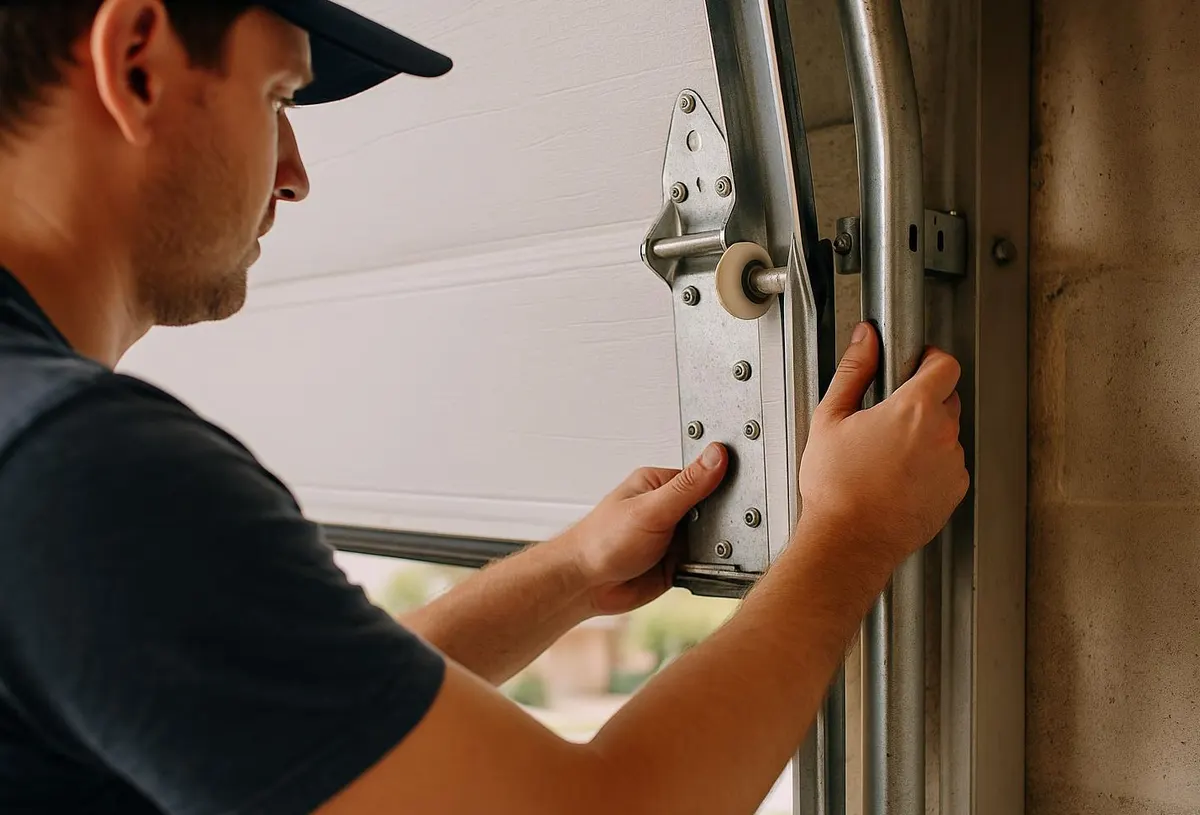
Metal tracks contract slightly in cooler temperatures, and if a track was already a little bent or loosely bolted, that small contraction is enough to make rollers bind where they didn't before. This is more common on older installations or doors that have taken minor impacts over the years.
The fix: Realigning and re-tightening the track hardware. If a section of track is visibly bent, it gets replaced rather than bent back, since a reshaped track tends to fail again under stress — particularly relevant here given how often wind-load events put extra strain on the whole system.
4. Spring Tension Feeling "Off"
Torsion and extension springs can feel stiffer in cold weather, and a door that was already running on borrowed time with a spring nearing the end of its cycle life may suddenly seem noticeably harder to lift, especially manually. This isn't the spring freezing — it's temperature-related metal behavior combined with wear that was already present.
The fix: This is not a DIY adjustment. A technician checks the spring's condition, cycle count, and tension, and recommends replacement if it's worn rather than just cold. Springs under tension are dangerous to handle without the right tools, and a professional will size the new spring to the door's actual weight.
5. Opener Sensitivity to Temperature and Moisture
If the door moves fine by hand but the opener struggles, the issue often sits with the motor unit itself. Garage-mounted circuit boards can develop condensation issues when temperatures swing between a cool night and a humid afternoon, and older openers sometimes misread the load when gears haven't been lubricated in years.
The fix: A diagnostic check of the opener's force settings, gear condition, and wiring. Sometimes this means a simple adjustment; other times it points toward an opener that's due for replacement, particularly if it's more than a decade old.
6. Wood Panel Swelling (Older Wood Doors Only)
Homes with older wood or wood-composite doors may notice the panels themselves swelling slightly with humidity, then tightening against the frame on cooler, drier mornings. This creates drag at the edges that has nothing to do with the track or springs at all.
The fix: Sanding, resealing, or in some cases panel replacement if the swelling has become a recurring seasonal pattern rather than a one-time issue.
When to Call Precision Garage Door of East Point
If peeling the bottom seal free doesn't solve it, or the door still drags and strains after a day or two of warmer weather, it's worth having it looked at rather than waiting it out. Our technicians handle this with a standard Garage Door Maintenance & Tune-Up, which covers lubrication, track alignment, and a spring tension check in one visit. If the issue turns out to be a worn spring rather than a cold-weather fluke, we handle Garage Door Spring Repair on the spot with the right size spring for your door's weight — not a generic replacement.
If your garage door in East Point, Apalachicola, Carrabelle, St. George Island, Lanark Village, Port St. Joe, or Mexico Beach is sticking, dragging, or straining this season, call Precision Garage Door of East Point and we'll get it moving smoothly again before it turns into a bigger repair.